Most Christmas movies involve the familiar plot where a family member overcomes a series of obstacles to return home in time for the holidays to be welcomed into the warmth of the family home, the bosom of family and friends, and the bounty of plentiful home cooked food. This is said to embody the Christmas spirit. Right on cue then comes FD’s case, which it seems was made for the season. Tony Muman of Halcyon Chambers led by Manjit Gill KC, and assisted by pupil Emma-Justine Michaux, was instructed by Sanjeev Sharma at J M Wilson Solicitors.
The Plot
FD, a Jamaican national, came to the UK in 1993 aged 28. In 1998 he was granted Indefinite Leave to Remain (“ILR”). Like many descendants of the Windrush generation, he did not apply for citizenship. In 2025 and in celebration of his 60th birthday, he and a few friends decided to visit Turkey for a 5-day break. This was his first trip abroad in 10 years; it is likely to be his last. Before leaving the UK on 18 September, FD was working full-time in a skilled job and was financially independent. He lived in rented accommodation and enjoyed family life with his two British young-adult children and British partner. He got his 90-day Turkish visit visa relying on his ILR; checked and double-checked his eVisa on his UKVI account; and, he ensured that he had his share codes in place and that they were working… so what could go wrong?
FD’s immigration status needs some unpacking. In 2006 he was made subject to a deportation order which he successfully appealed. His ILR was restored in 2007 and re-issued in 2012. In 2016 he was again subject to deportation but this time his appeals were unsuccessful. FD was placed on bail conditions, with which he was compliant. In 2019 he applied for a revocation of the deportation order because of risks that he would face in Jamaica and on the basis of his family and private life in the UK. He was interviewed and his claim went into the system. In 2022, having heard nothing from the Home Office, FD chased for an update on his case. He needed a share code to allow him to lawfully work. He was repeatedly told to wait for a decision. After chasing the Home Office, FD was advised to make a No Time Limit (“NTL”) application which would be the quickest way to obtain a decision and a share code. In 2022, as advised, FD made an NTL application declaring his convictions, sentence and immigration status. He continued to chase the Home Office for a decision. On 11 July 2023 the Home Office emailed him explaining that more time would be needed for a decision in the light of his criminal convictions. The internal Home Office records (disclosed during the case) shows that successive criminal and background checks were being undertaken by the Home Office pending the NTL decision. On 19 December 2024, over two years after the NTL application and over five years after his asylum and human rights claim, the Home Office emailed FD the NTL decision confirming that he has ILR in the UK. The decision had the effect of terminating FD’s bail conditions and confirmed that he has no immigration restriction on his right to work in the UK, or to travel outside the UK (save that he must return within two years at risk of losing his ILR), and that he could access an eVisa by creating an UKVI online account. FD subsequently opened a UKVI account and used his eVisa and share codes to confirm his right to work and rent in the UK. His employer and landlord also carried out their own checks using the share codes. All enquires resulted in positive verification.
Coming back to the plotline. FD and friends booked their return flights to Turkey. The airline sent the Advanced Passenger Information in advance to the Home Office, who did not indicate any concerns with FD’s ability to leave and, more importantly, return 5 days later, knowing that (a) he was relying on his NTL decision and on his eVisa as shown on his UKVI account, (b) he only had a 90 day visit visa to remain in Turkey, (c) that he had a return flight booked, and (d) he had made a credible asylum claim from Jamaica. On 18 September FD and friends travelled to Jamaica. At Birmingham airport, FD showed his passport, his eVisa, his share code and his Turkish visa. He encountered no problems leaving. FD celebrated his birthday in Turkey and on 23 September returned to Antalya airport to board his flight home. FD’s friends were allowed to board; he was stopped. Unbeknown to him at the time (and only discovered through this case) two days earlier the Home Office had refused the airline permission to bring FD home. FD showed the airline staff the same documents he used to leave the UK, but they refused to allow him to board simply saying that the Home Office had refused permission. He was just told to ring a helpline, and in turn was advised to seek legal advice. FD’s friends flew home. He had no option but to get a taxi to the closest hotel and from there to sort things out.
The route to judicial review
FD instructed Sanjeev Sharma at J M Wilson Solicitors who in turn sought counsel Tony Muman’s advice. Several emails were sent to the Home Office and ignored. The Home Office were told that FD was stranded in Turkey and asked to explain the reason why he was denied boarding. In the meantime, on 2 October, and strongly suspected to have been prompted by Sanjeev Sharma’semails, the Home Office posted to FD’s home a decision refusing his 2019 asylum and human rights claim. A photograph of the decision was WhatsApp’d to FD in Turkey, with a deadline of 16 October to appeal to the First-tier tribunal (IAC). The in-country right of appeal is not one which could have been exercised from Turkey. Nevertheless, to protect FD’s position, an appeal was filed with the tribunal on 15 October.
In the absence of a response from the Home Office, Judicial Review grounds were drafted overnight and lodged at the Upper Tribunal (IAC) on 23 October with an application for urgent consideration. UTJ O’Callaghan acted expeditiously and on 24 October ordered the Home Office to file an Acknowledgement of Service and Summary Grounds by 28 October with a hearing listed for 29 October. On 29 October the application for interim relief was heard by UTJ Blundell. It was only after hearing from FD’s counsel that Treasury Counsel confirmed in response, and for the first time, that the decision to refuse the airline permission to travel was taken under the Authority to Travel Scheme 2023, made under the Counter-Terrorism and Security Act 2015 and as such the Upper Tribunal did not have jurisdiction to hear the judicial review. The case was then transferred to the Administrative Court where on 3 November Chamberlain J ordered the JR to be listed w/c 10 November given the relative urgency and the fact that FD had been stranded in Turkey since 23 September. The Home Office position at the time was that this FD’s predicament was the consequence of his own decision to travel to Turkey while a deportation order was in force; that he would commit a criminal offence under s.24(A1) of the Immigration Act 1971 if he attempted to return to the UK; and that, as a matter of principle, the court should not grant relief which would facilitate this.
On 13 November the case came before Lieven J who ordered an expedited rolled-up permission hearing with a truncated timetable to allow judgment before 18 December, at which point FD’s 90-day Turkish visit visa would expire and he would become an overstayer exposing him to a risk of arrest and refoulment to Jamaica (remember, he had raised a credible asylum claim from Jamaica). Lieven J noted the “extreme hardship” that FD was suffering, including destitution and the impact on his mental health and on the mental health of family members in the UK, including a dependent sister. Her Ladyship referred to “very troubling conduct by the SSHD” and said that she was very troubled by the Home Office’s failure to make a decision on FD’s 2019 claims until 5 ½ years later and that there were good grounds to suspect that the decision was only generated by his departure from the UK. She went on to describe the Home Office’s conduct as “little short of abysmal” and stopped Treasury Counsel from arguing that the case did not have merit.
Thus it was that the hearing was listed on 10-11 December before Constable J.
FD’s circumstances in Turkey
Constable J, who heard the judicial review, described FD’s evidence as inherently credible. FD’s written evidence before Lieven J spoke of the continued dependency that his young-adult children had on him and of his very strong connection to life in the UK. He explained how he has spent longer living lawfully in the UK than he ever did in Jamaica. He gave evidence that he was the carer for his disabled older sister who was dependent on him and how his absence was causing her panic attacks and hardship. He explained how he was living day-to-day in Turkey and had to borrow money from family and friends to pay for his unforeseen extended stay. As for his bills back home, he did not know how to pay them in his absence and they were being unmet. He explained how his job was at risk the longer he remained away from home and the psychological damage that it was having on him. He even volunteered to pay the cost of the return flight home. He described how his eVisa had suddenly disappeared from his UKVI account without notice or opportunity to make representations.
In a follow-up witness statement FD explained how he was surviving through monies borrowed from family and friends in the UK and having sold all belongings of worth in the UK. He gave details to the penny about the money that he had been sent, how he was spending it, and what he had left. He explained that he was now staying in a B&B on a room only basis. He explained how whilst he was in Turkey his partner’s mother had been admitted to hospital in a critical condition and the impact that his enforced absence was having on his partner, and his inability to support her. He explained how his jobs had been given to other employees and that the longer he remained in Turkey the lower the chance for him to return to work. He further explained his mounting debts as a result of being stuck in Turkey and his inability to pay for things like council tax, and TV License and etc. and how he was now in breach of repayment plans agreed for previous debts. He also explained how he was at risk of repossession of his rented accommodation given his absence and inability to pay the rent and gave very detailed evidence as to the very serious detriment to his mental health that was being aggravated every day.
FD’s third witness statement updated his position. He explained that he was now suicidal and would be homeless within 2-days having run out of money. He suffered from dizziness, anxiety, vitamin deficiency, and could not sleep for more than 2-hours at a time. He had lost weight because he could not afford to eat regular meals. He explained that as the only black and English-speaking person in a rough part of Istanbul he was scared to go outside, especially in the context of heightened police control due to protests. He expressed the very real possibility that if Turkish police were to stop him in the street and interrogate him, he would not be able to show an eVisa and the authorities would deduce that he entered Turkey illegally, which would likely lead to his deportation to Jamaica where he feared for his life. He had asked someone to clear his flat in the UK as he was awaiting repossession. His job had now definitely been redistributed.
In his fourth and final witness statement, written on 8 December, FD updated the Court that he had been homeless since 5 December and sleeping in different places every night to escape the police’s attention. He had spent the last night in a bus shelter during a thunderstorm, and gave serious consideration to ending his life. His family had ran out of resources to provide for him and he was now begging for food and drink.
Judgment
Following 1½ day of argument between 10-11 December, and acutely conscious of FD’s dire situation and the need for the SSHD to commence immediate preparations to facilitate his return to the UK before the expiry of his Turkish visit visa at 00:00hrs on Thursday 18 December, Constable J indicated that he had formed the view that the SSHD’s refusal to carry order was unlawful, as was the removal of FD’s eVisa. The Home Office had created a legitimate expectation which, at the very least, entitled FD to enter and leave the United Kingdom. Although Constable J was not in a position to give full judgment that day, he expected that this indication would be enough for FD to be returned to the UK before his Turkish visit visa expired, a week later. He therefore ordered the Home Office to facilitate FD’s return to the UK, and for immediate arrangements to be put into place to get FD off the streets and into accommodation where he could be fed and bathe.
In response to Treasury Counsel’s concerns as to the Court’s power to order FD’s return in circumstances where, on the Home Office case, he remained subject to an extant Deportation Order, his Lordship agreed to provide written reasons for allowing the claim on the limited basis indicated; reserving his decision on the remaining grounds. Treasury Counsel indicated that the SSHD would want to appeal but that she needed time to formulate her grounds in the light of the reasons, to be given. Noting the immediacy of the injunction ordered by Constable J, and the need to put into play arrangements for his return, Treasury Counsel did not ask for a stay of execution on the terms of the injunction.
On Saturday 12 December at 20:05hrs Constable J’s clerk emailed his judgment allowing the judicial review on all grounds. His Lordship’s efforts to write an impressive judgment over a busy festive weekend was no easy feat and one gratefully appreciated by FD and his legal team. An urgent hearing was listed for judgment hand-down on Monday 15 December at 12:30hrs. At that hearing, Constable J refused the SSHD’s application for Permission to Appeal to the Court of Appeal. Again, Treasury Counsel did not ask for a stay of execution on Constable J’s injunction.
SSHD’s application for a stay of execution
Despite having had from Thursday afternoon the prior week to draft her grounds of appeal, the SSHD did not file her Appellant’s Notice until 13:48hrs on Tuesday 16 December, notwithstanding that FD had been booked on a flight leaving Antalya to Istanbul at 04:30hrs (07:30hrs Turkey time) on Wednesday 17 December, and then flying from Istanbul to Birmingham at 11:30hrs (14:30hrs Turkey time). The Notice sought expedition and a stay of execution on the injunction ordered by Constable J, despite the SSHD not having asked his Lordship for one.
At 14:22hrs on 16 December, Sanjeev Sharma contacted the Court of Appeal to confirm that FD would be making objections to the SSHD’s applications, and principally the application for a stay of execution, the effect of which would be to prevent FD from returning home and potentially force him back into a state of destitution and homelessness in Turkey and an even greater decline in his mental health than already suffered. At 15:11hrs the Court allocated on an expedited basis an appeal number. A further letter was then sent by Sanjeev Sharma to the Court advising that objections would follow and asking for a decision not to be made until consideration of FD’s submissions and evidence. It seems that this advance warning did not make its way to the relevant person because at 19:56hrs Lewis LJ, the out-of-hours duty judge at the Court of Appeal, made an order staying Constable J’s injunction until Thursday 18 December. He seemingly did so without asking FD’s legal team for comment. The order was sent to the GLD only, and was only forwarded by the GLD to FD’s team at 21:09hrs. Fortuitously for FD, his legal team had not switched-off to celebrate the win, but remained on standby to – as it turned out – work throughout the night and into breakfast hours with overflow of caffeine to lift the stay of execution and ensure FD returned home safely.
What happened is as follows. Anticipating that the SSHD would be appealing and asking for a stay of execution, and foreshadowing that the Court of Appeal may list an urgent hearing with very short notice, Tony Muman and Sanjeev Sharma, under the direction of Manjit Gill KC, set up camp to work overnight at a hotel in London. At 22:12hrs Sanjeev Sharma emailed Lewis LJ’s clerk advising that detailed submissions were being simultaneously drafted by Tony Muman and Manjit Gill KC, and that Lewis LJ should be on standby to receive them. At 22:57hrs hurried submissions were emailed to Lewis LJ pointing out that FD was booked to travel from Antalya at 04:30hrs (07:30hrs Turkey time), was required to check-in at the airport at 01:30hrs (04:30hrs Turkey time) and had a taxi booked to transit to the airport at 00:30hrs (03:30hrs Turkey time). The submissions exhibited FD’s evidence (referred to above) which the SSHD did not show Lewis LJ. Additionally, Lewis LJ was not informed that the reason for the injunction having to be before 18 December was that FD’s visit visa of 90 days expired at the end of 17 December, and that FD had been booked already on a flight to return to the UK and would be on his way to airport shortly. This kind of conduct from a claimant’s lawyer would have unhesitatingly resulted in a disciplinary to the regulatory body and the lawyer hauled before the court to explain the lack of candour. Perhaps given the fast-moving pace of developments and the early hours at which this all took place, this has been overlooked.
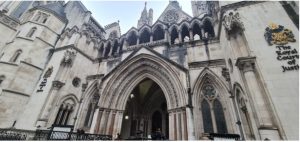
At 23:34hrs another email was sent to Lewis LJ’s clerk advising that an order needed to be made by 00:30hrs because FD’s flight was at 04:30hrs (07:30hrs Turkey time). At the same time, FD was packed and sitting in his hotel lobby waiting for the green light to leave. In the absence of a response from Lewis LJ’s clerk, Sanjeev Sharma and Tony Muman with Manjit Gill KC on the other end of the line, called the security office at the RCJ. This then resulted in security contacting the duty judge’s clerk, who then rang back after midnight. The upshot of that phone call was to confirm that she and Lewis LJ had not seen any of the earlier correspondence, had not heard the voicemail left for her earlier that evening, and was unaware that FD’s visit visa was expiring at 00:00hrs on 18 December and that he would be liable to arrest and prosecution thereafter. By this time, of course, Lewis LJ was asleep and had to be waken. At about 01:08hrs, Lewis LJ telephoned Sanjeev Sharma who confirmed that in the event of his non-scheduled departure from Turkey, FD would be liable to arrest as an overstayer. Lewis LJ asked Sanjeev Sharma to ring GLD and ask them to confirm their position in response to the application to lift the stay, and to update him on the result. All of this may have been avoided had the duty judge insisted on the same enquiry to be made with FD’s legal team earlier in the evening. Unsurprisingly, GLD did not answer the phone at that time in the morning, which then led to Lewis LJ issuing a new order at 01:25hrs lifting the stay that he had earlier imposed. It was only at this point that FD was able to leave for the airport. Whilst FD was en-route to the airport, Tony Muman and Sanjeev Sharma called the Home Office Passenger Advice Line at 01:41hrs and made representations to ensure that FD would be allowed to board. Despite this, on arrival FD was, predictably, denied boarding by airline staff because he was unable to produce an eVisa. This was entirely foreseeable and something that the Home Office was earlier asked to avoid, either through the reinstatement of FD’s eVisa or through the production of some other paper-based document that he could show to airport staff. The Home Office did neither and simply gave empty assurances that FD would be allowed to board. This then led to several further frantic phone calls to the airline staff, including emailing Lewis LJ’s order at 02:37hrs. At this point, repeat calls to the supposed 24hrs Home Office Passenger Advice Line went unanswered. At about 03:30hrs, having pointed out to the airline staff that this first leg was internal only (Antalya to Istanbul) and that there were no barriers in allowing FD to board even without an eVisa, he was permitted on the plane. Several emails and calls were then placed over the short commute to Istanbul, in an attempt to ensure that there would not be a repeat in Istanbul. On arrival at Istanbul, FD stayed within the transit zone. It was only when his flight started to board that he encountered the same problems and was denied boarding. This then led to another flurry of emails and telephone calls, including asking the Home Office to arrange for its agent at the airport to attend the desk. The upshot is that after exhaustive representations by Tony Muman and Sanjeev Sharma, FD was finally allowed to board his flight home. By the time FD reached Birmingham airport, things were slightly easier because communication with the Home Office had resumed through the GLD during normal office hours. FD was detained shortly on arrival at BHX and served with papers imposing immigration bail, the legality of which is questionable. Nevertheless, shortly thereafter he was allowed to leave the airport where his family and friends were desperately waiting for his arrival.
What’s next?
The SSHD is pushing for expedition on her appeal, and in particular against Constable J’s decision on the construction of the scope of the Authority to Travel Scheme 2023 and on the issue of what types of risks/persons can potentially fall within it. The Court of Appeal has granted expedition and has ordered FD to file written submissions early in the New Year. The original order, since objected to, required FD to file submissions within the holiday period. As pointed out, seemingly no consideration was given at all to the impact on FD and his legal team in having to meet the arbitrary deadlines requested by the SSHD. Although suffering with a serious decline in his mental health, and likely PTSD such that he has been prescribed anti-depressants and sleeping tablets, FD was at least able to spend Christmas with his family, sleeping in a warm bed and enjoying a different kind of Turkey. By way of contrast, just over a week earlier he had been sleeping rough under a bridge using his suitcase as a pillow and covering himself with a borrowed blanket from the B&B, and begging for scraps of food in the street. In the New Year, FD will attempt to restart his life and address the damage to his mental and physical health. The first new obstacle will be for him to prove his right to work and rent. This will require him to have his eVisa restored and to produce share codes. This case is far from over, but for now at least FD is safe and back home with his family and the holiday nightmare is over.
The views stated in this article belong to the writers in a personal capacity. No warranty is given, express or implied, in respect of the contents of this article, factual or legal. Nothing in this article is tendered as or is intended to be taken as legal advice and the contents should not be construed or relied upon as legal advice. Specialist legal advice should always be taken in every case noting that the application of the law may vary according to the individual facts of the case and the nature of the dispute.

0 thoughts on “FD v SSHD [2025] EWHC 3291 (Admin)”
Comments are closed.