FD v SSHD [2025] EWHC 3291 (Admin)


Most Christmas movies involve the familiar plot where a family member overcomes a series of obstacles to return home in time for the holidays to be welcomed into the warmth of the family home, the bosom of family and friends, and the bounty of plentiful home cooked food.  This is said to embody the Christmas spirit.  Right on cue then comes FD’s case, which it seems was made for the season.  Tony Muman of Halcyon Chambers led by Manjit Gill KC, and assisted by pupil Emma-Justine Michaux, was instructed by Sanjeev Sharma at J M Wilson Solicitors.

The Plot

FD, a Jamaican national, came to the UK in 1993 aged 28.  In 1998 he was granted Indefinite Leave to Remain (“ILR”).  Like many descendants of the Windrush generation, he did not apply for citizenship.  In 2025 and in celebration of his 60th birthday, he and a few friends decided to visit Turkey for a 5-day break.  This was his first trip abroad in 10 years; it is likely to be his last.  Before leaving the UK on 18 September, FD was working full-time in a skilled job and was financially independent.  He lived in rented accommodation and enjoyed family life with his two British young-adult children and British partner.  He got his 90-day Turkish visit visa relying on his ILR; checked and double-checked his eVisa on his UKVI account; and, he ensured that he had his share codes in place and that they were working… so what could go wrong?

FD’s immigration status needs some unpacking.  In 2006 he was made subject to a deportation order which he successfully appealed.  His ILR was restored in 2007 and re-issued in 2012.  In 2016 he was again subject to deportation but this time his appeals were unsuccessful.  FD was placed on bail conditions, with which he was compliant.  In 2019 he applied for a revocation of the deportation order because of risks that he would face in Jamaica and on the basis of his family and private life in the UK.  He was interviewed and his claim went into the system.  In 2022, having heard nothing from the Home Office, FD chased for an update on his case.  He needed a share code to allow him to lawfully work.  He was repeatedly told to wait for a decision.  After chasing the Home Office, FD was advised to make a No Time Limit (“NTL”) application which would be the quickest way to obtain a decision and a share code.  In 2022, as advised, FD made an NTL application declaring his convictions, sentence and immigration status.  He continued to chase the Home Office for a decision.  On 11 July 2023 the Home Office emailed him explaining that more time would be needed for a decision in the light of his criminal convictions.  The internal Home Office records (disclosed during the case) shows that successive criminal and background checks were being undertaken by the Home Office pending the NTL decision.  On 19 December 2024, over two years after the NTL application and over five years after his asylum and human rights claim, the Home Office emailed FD the NTL decision confirming that he has ILR in the UK.  The decision had the effect of terminating FD’s bail conditions and confirmed that he has no immigration restriction on his right to work in the UK, or to travel outside the UK (save that he must return within two years at risk of losing his ILR), and that he could access an eVisa by creating an UKVI online account.  FD subsequently opened a UKVI account and used his eVisa and share codes to confirm his right to work and rent in the UK.  His employer and landlord also carried out their own checks using the share codes.  All enquires resulted in positive verification.

Coming back to the plotline.  FD and friends booked their return flights to Turkey.  The airline sent the Advanced Passenger Information in advance to the Home Office, who did not indicate any concerns with FD’s ability to leave and, more importantly, return 5 days later, knowing that (a) he was relying on his NTL decision and on his eVisa as shown on his UKVI account, (b) he only had a 90 day visit visa to remain in Turkey, (c) that he had a return flight booked, and (d) he had made a credible asylum claim from Jamaica.  On 18 September FD and friends travelled to Jamaica.  At Birmingham airport, FD showed his passport, his eVisa, his share code and his Turkish visa.  He encountered no problems leaving.  FD celebrated his birthday in Turkey and on 23 September returned to Antalya airport to board his flight home.  FD’s friends were allowed to board; he was stopped.  Unbeknown to him at the time (and only discovered through this case) two days earlier the Home Office had refused the airline permission to bring FD home.  FD showed the airline staff the same documents he used to leave the UK, but they refused to allow him to board simply saying that the Home Office had refused permission.  He was just told to ring a helpline, and in turn was advised to seek legal advice.  FD’s friends flew home.  He had no option but to get a taxi to the closest hotel and from there to sort things out.

The route to judicial review 

FD instructed Sanjeev Sharma at J M Wilson Solicitors who in turn sought counsel Tony Muman’s advice.  Several emails were sent to the Home Office and ignored.  The Home Office were told that FD was stranded in Turkey and asked to explain the reason why he was denied boarding.  In the meantime, on 2 October, and strongly suspected to have been prompted by Sanjeev Sharma’semails, the Home Office posted to FD’s home a decision refusing his 2019 asylum and human rights claim.  A photograph of the decision was WhatsApp’d to FD in Turkey, with a deadline of 16 October to appeal to the First-tier tribunal (IAC).  The in-country right of appeal is not one which could have been exercised from Turkey.  Nevertheless, to protect FD’s position, an appeal was filed with the tribunal on 15 October.

In the absence of a response from the Home Office, Judicial Review grounds were drafted overnight and lodged at the Upper Tribunal (IAC) on 23 October with an application for urgent consideration.  UTJ O’Callaghan acted expeditiously and on 24 October ordered the Home Office to file an Acknowledgement of Service and Summary Grounds by 28 October with a hearing listed for 29 October.  On 29 October the application for interim relief was heard by UTJ Blundell.  It was only after hearing from FD’s counsel that Treasury Counsel confirmed in response, and for the first time, that the decision to refuse the airline permission to travel was taken under the Authority to Travel Scheme 2023, made under the Counter-Terrorism and Security Act 2015 and as such the Upper Tribunal did not have jurisdiction to hear the judicial review.  The case was then transferred to the Administrative Court where on 3 November Chamberlain J ordered the JR to be listed w/c 10 November given the relative urgency and the fact that FD had been stranded in Turkey since 23 September.  The Home Office position at the time was that this FD’s predicament was the consequence of his own decision to travel to Turkey while a deportation order was in force; that he would commit a criminal offence under s.24(A1) of the Immigration Act 1971 if he attempted to return to the UK; and that, as a matter of principle, the court should not grant relief which would facilitate this.

On 13 November the case came before Lieven J who ordered an expedited rolled-up permission hearing with a truncated timetable to allow judgment before 18 December, at which point FD’s 90-day Turkish visit visa would expire and he would become an overstayer exposing him to a risk of arrest and refoulment to Jamaica (remember, he had raised a credible asylum claim from Jamaica).  Lieven J noted the “extreme hardship” that FD was suffering, including destitution and the impact on his mental health and on the mental health of family members in the UK, including a dependent sister.  Her Ladyship referred to “very troubling conduct by the SSHD” and said that she was very troubled by the Home Office’s failure to make a decision on FD’s 2019 claims until 5 ½ years later and that there were good grounds to suspect that the decision was only generated by his departure from the UK.  She went on to describe the Home Office’s conduct as “little short of abysmal” and stopped Treasury Counsel from arguing that the case did not have merit.

Thus it was that the hearing was listed on 10-11 December before Constable J.

FD’s circumstances in Turkey

Constable J, who heard the judicial review, described FD’s evidence as inherently credible.  FD’s written evidence before Lieven J spoke of the continued dependency that his young-adult children had on him and of his very strong connection to life in the UK.  He explained how he has spent longer living lawfully in the UK than he ever did in Jamaica.  He gave evidence that he was the carer for his disabled older sister who was dependent on him and how his absence was causing her panic attacks and hardship.  He explained how he was living day-to-day in Turkey and had to borrow money from family and friends to pay for his unforeseen extended stay.  As for his bills back home, he did not know how to pay them in his absence and they were being unmet.  He explained how his job was at risk the longer he remained away from home and the psychological damage that it was having on him.  He even volunteered to pay the cost of the return flight home.  He described how his eVisa had suddenly disappeared from his UKVI account without notice or opportunity to make representations.

In a follow-up witness statement FD explained how he was surviving through monies borrowed from family and friends in the UK and having sold all belongings of worth in the UK.  He gave details to the penny about the money that he had been sent, how he was spending it, and what he had left.  He explained that he was now staying in a B&B on a room only basis.  He explained how whilst he was in Turkey his partner’s mother had been admitted to hospital in a critical condition and the impact that his enforced absence was having on his partner, and his inability to support her.  He explained how his jobs had been given to other employees and that the longer he remained in Turkey the lower the chance for him to return to work.  He further explained his mounting debts as a result of being stuck in Turkey and his inability to pay for things like council tax, and TV License and etc. and how he was now in breach of repayment plans agreed for previous debts.  He also explained how he was at risk of repossession of his rented accommodation given his absence and inability to pay the rent and gave very detailed evidence as to the very serious detriment to his mental health that was being aggravated every day.

FD’s third witness statement updated his position.  He explained that he was now suicidal and would be homeless within 2-days having run out of money.  He suffered from dizziness, anxiety, vitamin deficiency, and could not sleep for more than 2-hours at a time.  He had lost weight because he could not afford to eat regular meals.  He explained that as the only black and English-speaking person in a rough part of Istanbul he was scared to go outside, especially in the context of heightened police control due to protests.  He expressed the very real possibility that if Turkish police were to stop him in the street and interrogate him, he would not be able to show an eVisa and the authorities would deduce that he entered Turkey illegally, which would likely lead to his deportation to Jamaica where he feared for his life.  He had asked someone to clear his flat in the UK as he was awaiting repossession.  His job had now definitely been redistributed.

In his fourth and final witness statement, written on 8 December, FD updated the Court that he had been homeless since 5 December and sleeping in different places every night to escape the police’s attention.  He had spent the last night in a bus shelter during a thunderstorm, and gave serious consideration to ending his life.  His family had ran out of resources to provide for him and he was now begging for food and drink.

Judgment

Following 1½ day of argument between 10-11 December, and acutely conscious of FD’s dire situation and the need for the SSHD to commence immediate preparations to facilitate his return to the UK before the expiry of his Turkish visit visa at 00:00hrs on Thursday 18 December, Constable J indicated that he had formed the view that the SSHD’s refusal to carry order was unlawful, as was the removal of FD’s eVisa.  The Home Office had created a legitimate expectation which, at the very least, entitled FD to enter and leave the United Kingdom.  Although Constable J was not in a position to give full judgment that day, he expected that this indication would be enough for FD to be returned to the UK before his Turkish visit visa expired, a week later.  He therefore ordered the Home Office to facilitate FD’s return to the UK, and for immediate arrangements to be put into place to get FD off the streets and into accommodation where he could be fed and bathe.

In response to Treasury Counsel’s concerns as to the Court’s power to order FD’s return in circumstances where, on the Home Office case, he remained subject to an extant Deportation Order, his Lordship agreed to provide written reasons for allowing the claim on the limited basis indicated; reserving his decision on the remaining grounds.  Treasury Counsel indicated that the SSHD would want to appeal but that she needed time to formulate her grounds in the light of the reasons, to be given.  Noting the immediacy of the injunction ordered by Constable J, and the need to put into play arrangements for his return, Treasury Counsel did not ask for a stay of execution on the terms of the injunction.

On Saturday 12 December at 20:05hrs Constable J’s clerk emailed his judgment allowing the judicial review on all grounds.  His Lordship’s efforts to write an impressive judgment over a busy festive weekend was no easy feat and one gratefully appreciated by FD and his legal team.  An urgent hearing was listed for judgment hand-down on Monday 15 December at 12:30hrs.  At that hearing, Constable J refused the SSHD’s application for Permission to Appeal to the Court of Appeal.  Again, Treasury Counsel did not ask for a stay of execution on Constable J’s  injunction.

SSHD’s application for a stay of execution

Despite having had from Thursday afternoon the prior week to draft her grounds of appeal, the SSHD did not file her Appellant’s Notice until 13:48hrs on Tuesday 16 December, notwithstanding that FD had been booked on a flight leaving Antalya to Istanbul at 04:30hrs (07:30hrs Turkey time) on Wednesday 17 December, and then flying from Istanbul to Birmingham at 11:30hrs (14:30hrs Turkey time).  The Notice sought expedition and a stay of execution on the injunction ordered by Constable J, despite the SSHD not having asked his Lordship for one.

At 14:22hrs on 16 December, Sanjeev Sharma contacted the Court of Appeal to confirm that FD would be making objections to the SSHD’s applications, and principally the application for a stay of execution, the effect of which would be to prevent FD from returning home and potentially force him back into a state of destitution and homelessness in Turkey and an even greater decline in his mental health than already suffered.  At 15:11hrs the Court allocated on an expedited basis an appeal number.  A further letter was then sent by Sanjeev Sharma to the Court advising that objections would follow and asking for a decision not to be made until consideration of FD’s submissions and evidence.  It seems that this advance warning did not make its way to the relevant person because at 19:56hrs Lewis LJ, the out-of-hours duty judge at the Court of Appeal, made an order staying Constable J’s injunction until Thursday 18 December.  He seemingly did so without asking FD’s legal team for comment.  The order was sent to the GLD only, and was only forwarded by the GLD to FD’s team at 21:09hrs.  Fortuitously for FD, his legal team had not switched-off to celebrate the win, but remained on standby to – as it turned out – work throughout the night and into breakfast hours with overflow of caffeine to lift the stay of execution and ensure FD returned home safely.

What happened is as follows.  Anticipating that the SSHD would be appealing and asking for a stay of execution, and foreshadowing that the Court of Appeal may list an urgent hearing with very short notice, Tony Muman and Sanjeev Sharma, under the direction of Manjit Gill KC, set up camp to work overnight at a hotel in London.  At 22:12hrs Sanjeev Sharma emailed Lewis LJ’s clerk advising that detailed submissions were being simultaneously drafted by Tony Muman and Manjit Gill KC, and that Lewis LJ should be on standby to receive them.  At 22:57hrs hurried submissions were emailed to Lewis LJ pointing out that FD was booked to travel from Antalya at 04:30hrs (07:30hrs Turkey time), was required to check-in at the airport at 01:30hrs (04:30hrs Turkey time) and had a taxi booked to transit to the airport at 00:30hrs (03:30hrs Turkey time).  The submissions exhibited FD’s evidence (referred to above) which the SSHD did not show Lewis LJ.  Additionally, Lewis LJ was not informed that the reason for the injunction having to be before 18 December was that FD’s visit visa of 90 days expired at the end of 17 December, and that FD had been booked already on a flight to return to the UK and would be on his way to airport shortly.  This kind of conduct from a claimant’s lawyer would have unhesitatingly resulted in a disciplinary to the regulatory body and the lawyer hauled before the court to explain the lack of candour.  Perhaps given the fast-moving pace of developments and the early hours at which this all took place, this has been overlooked.

At 23:34hrs another email was sent to Lewis LJ’s clerk advising that an order needed to be made by 00:30hrs because FD’s flight was at 04:30hrs (07:30hrs Turkey time).  At the same time, FD was packed and sitting in his hotel lobby waiting for the green light to leave.  In the absence of a response from Lewis LJ’s clerk, Sanjeev Sharma and Tony Muman with Manjit Gill KC on the other end of the line, called the security office at the RCJ.  This then resulted in security contacting the duty judge’s clerk, who then rang back after midnight.  The upshot of that phone call was to confirm that she and Lewis LJ had not seen any of the earlier correspondence, had not heard the voicemail left for her earlier that evening, and was unaware that FD’s visit visa was expiring at 00:00hrs on 18 December and that he would be liable to arrest and prosecution thereafter.  By this time, of course, Lewis LJ was asleep and had to be waken.  At about 01:08hrs, Lewis LJ telephoned Sanjeev Sharma who confirmed that in the event of his non-scheduled departure from Turkey, FD would be liable to arrest as an overstayer.  Lewis LJ asked Sanjeev Sharma to ring GLD and ask them to confirm their position in response to the application to lift the stay, and to update him on the result.  All of this may have been avoided had the duty judge insisted on the same enquiry to be made with FD’s legal team earlier in the evening.  Unsurprisingly, GLD did not answer the phone at that time in the morning, which then led to Lewis LJ issuing a new order at 01:25hrs lifting the stay that he had earlier imposed.  It was only at this point that FD was able to leave for the airport.  Whilst FD was en-route to the airport, Tony Muman and Sanjeev Sharma called the Home Office Passenger Advice Line at 01:41hrs and made representations to ensure that FD would be allowed to board.  Despite this, on arrival FD was, predictably, denied boarding by airline staff because he was unable to produce an eVisa.  This was entirely foreseeable and something that the Home Office was earlier asked to avoid, either through the reinstatement of FD’s eVisa or through the production of some other paper-based document that he could show to airport staff.  The Home Office did neither and simply gave empty assurances that FD would be allowed to board.  This then led to several further frantic phone calls to the airline staff, including emailing Lewis LJ’s order at 02:37hrs.  At this point, repeat calls to the supposed 24hrs Home Office Passenger Advice Line went unanswered.  At about 03:30hrs, having pointed out to the airline staff that this first leg was internal only (Antalya to Istanbul) and that there were no barriers in allowing FD to board even without an eVisa, he was permitted on the plane.  Several emails and calls were then placed over the short commute to Istanbul, in an attempt to ensure that there would not be a repeat in Istanbul.  On arrival at Istanbul, FD stayed within the transit zone.  It was only when his flight started to board that he encountered the same problems and was denied boarding.  This then led to another flurry of emails and telephone calls, including asking the Home Office to arrange for its agent at the airport to attend the desk.  The upshot is that after exhaustive representations by Tony Muman and Sanjeev Sharma, FD was finally allowed to board his flight home.  By the time FD reached Birmingham airport, things were slightly easier because communication with the Home Office had resumed through the GLD during normal office hours.  FD was detained shortly on arrival at BHX and served with papers imposing immigration bail, the legality of which is questionable.  Nevertheless, shortly thereafter he was allowed to leave the airport where his family and friends were desperately waiting for his arrival.

What’s next?

The SSHD is pushing for expedition on her appeal, and in particular against Constable J’s decision on the construction of the scope of the Authority to Travel Scheme 2023 and on the issue of what types of risks/persons can potentially fall within it.  The Court of Appeal has granted expedition and has ordered FD to file written submissions early in the New Year.  The original order, since objected to, required FD to file submissions within the holiday period.  As pointed out, seemingly no consideration was given at all to the impact on FD and his legal team in having to meet the arbitrary deadlines requested by the SSHD.  Although suffering with a serious decline in his mental health, and likely PTSD such that he has been prescribed anti-depressants and sleeping tablets, FD was at least able to spend Christmas with his family, sleeping in a warm bed and enjoying a different kind of Turkey.  By way of contrast, just over a week earlier he had been sleeping rough under a bridge using his suitcase as a pillow and covering himself with a borrowed blanket from the B&B, and begging for scraps of food in the street.  In the New Year, FD will attempt to restart his life and address the damage to his mental and physical health.  The first new obstacle will be for him to prove his right to work and rent.  This will require him to have his eVisa restored and to produce share codes.  This case is far from over, but for now at least FD is safe and back home with his family and the holiday nightmare is over.

The views stated in this article belong to the writers in a personal capacity. No warranty is given, express or implied, in respect of the contents of this article, factual or legal. Nothing in this article is tendered as or is intended to be taken as legal advice and the contents should not be construed or relied upon as legal advice. Specialist legal advice should always be taken in every case noting that the application of the law may vary according to the individual facts of the case and the nature of the dispute.

In Plain Sight, Coady v Coady – Wills Made During Covid Lockdown

Article by Harry Owen

Recent times have seen an increase in the number of cases where the validity of a Will is challenged.  The reasons for this are varied, ranging from procedural irregularities in making the Will to allegations of undue influence or coercion and the mental capacity of the testator.



The recent High Court case of Mr Peter Coady (Claimant) v Mr Gerard Coady (Defendant), in the estate of Kathleen Bernadette Coady (Deceased), concerned the validity of a Will dated 25 April 2020 of the late Mrs Coady, who passed away on 18 November 2022. The Claimant and Defendant were two of her five children.

Background

During the first Covid-19 lockdown, in April 2020, Kathleen Coady made a Will, appointing her son, Gerard, as sole executor and trustee and leaving the residual estate to him.  Gerard had enlisted the assistance of solicitors in preparing the Will, making arrangements for the Will to be signed at Kathleen Coady’s home.

The 2020 Will superseded her previous Will, which had been made in 2017. The 2017 Will had appointed Kathleen Coady’s eldest son, Peter, as executor, and made provision for three of Kathleen Coady’s children and seven of her grandchildren to receive legacies, with the residual estate being left to Peter.

Peter brought proceedings, challenging the 2020 Will, on the basis that the Will had not been properly signed and witnessed.

During the trial, the witnesses to Kathleen’s Will, gave evidence that they were asked by Gerard to act as witnesses to the signing of the Will as an emergency measure. Neither of the witnesses were close to either Gerard or Kathleen Coady and stated that they had seen little of her in recent times. Having been asked to attend Kathleen Coady’s address to witness the Will being signed, they came to the back garden, where a table had been set up about 10 to 12 feet from the open back door with Kathleen seated inside, six to eight feet from the door.

Gerard gave evidence that once the witnesses had arrived, he had read out the entire Will, confirmed Kathleen understood everything and followed all the necessary protocols regarding signing and witnessing.

Despite this, one of the witnesses expressed concerns regarding the health of Mrs Coady, stating that she looked very ill and half asleep. The other said she was frail, silent and ‘like a zombie’.

The witnesses described the signing as rushed and stated that some of the papers that they had been asked to sign had been folded over or partially covered. Neither witness had seen Kathleen sign the Will and both noted that she did not appear to be aware of their presence and that she did not acknowledge them.

It was further suggested by the witnesses that Kathleen was not seen to sign the Will, and that she had not been able to see either of them sign the Will from where she was positioned.

According to the witnesses, the entire process took just two or three minutes and they were in the garden for less than five minutes in total, before leaving.

During the trial, the Judge required the Will to be read out in full and timed. That process took just under six minutes, which raised questions in respect of Gerard Coady’s evidence that he had read the Will in its entirety, to his mother, while the witnesses were present in the garden.

Ultimately, the Judge ruled that Kathleen Coady did not sign or acknowledge her signature in the presence of both witnesses, and that the witnesses did not attest and sign the Will in her presence. As a result, the Judge declared the 2020 Will invalid because it was not executed in accordance with Section 9 of the Wills Act 1837 even with the temporary extension to legislation.

Temporary changes to legislation

During the pandemic, there had understandably, been a significant increase in the number of people wanting to make and execute their own Wills. In the circumstances at the time, many of these Wills were made at home.

During lockdown, in an effort to accommodate the increase in the number of Wills being made, a temporary amendment to the Wills Act came into force. From September 2020 the amendment allowed Wills in England and Wales, to be witnessed remotely, where previously, witnesses had been required to be physically present.  This allowed compliance with the strict social distancing rules in force at the time, while allowing Wills to be legally witnessed.

This case should serve as a reminder that, even with the temporary relaxation of the rules in relation to witnessing a Will, the courts are not willing to move away from the strict criteria to be adhered to in making a Will.

With growing numbers of challenges to the validity of Wills and especially considering the very large numbers of Wills that were made during the pandemic, it may now be advisable that any Will made during that time be checked to ensure that the legal formalities were complied with.

Sadly, for some, by the time that their Will is checked it really will be too late to rectify any procedural errors.

The SAL Awards 2025


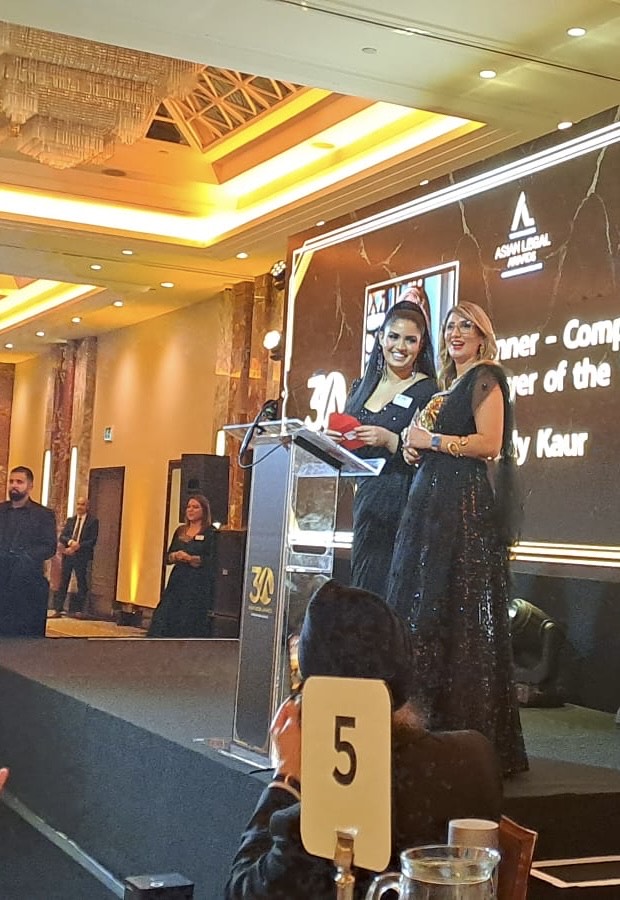
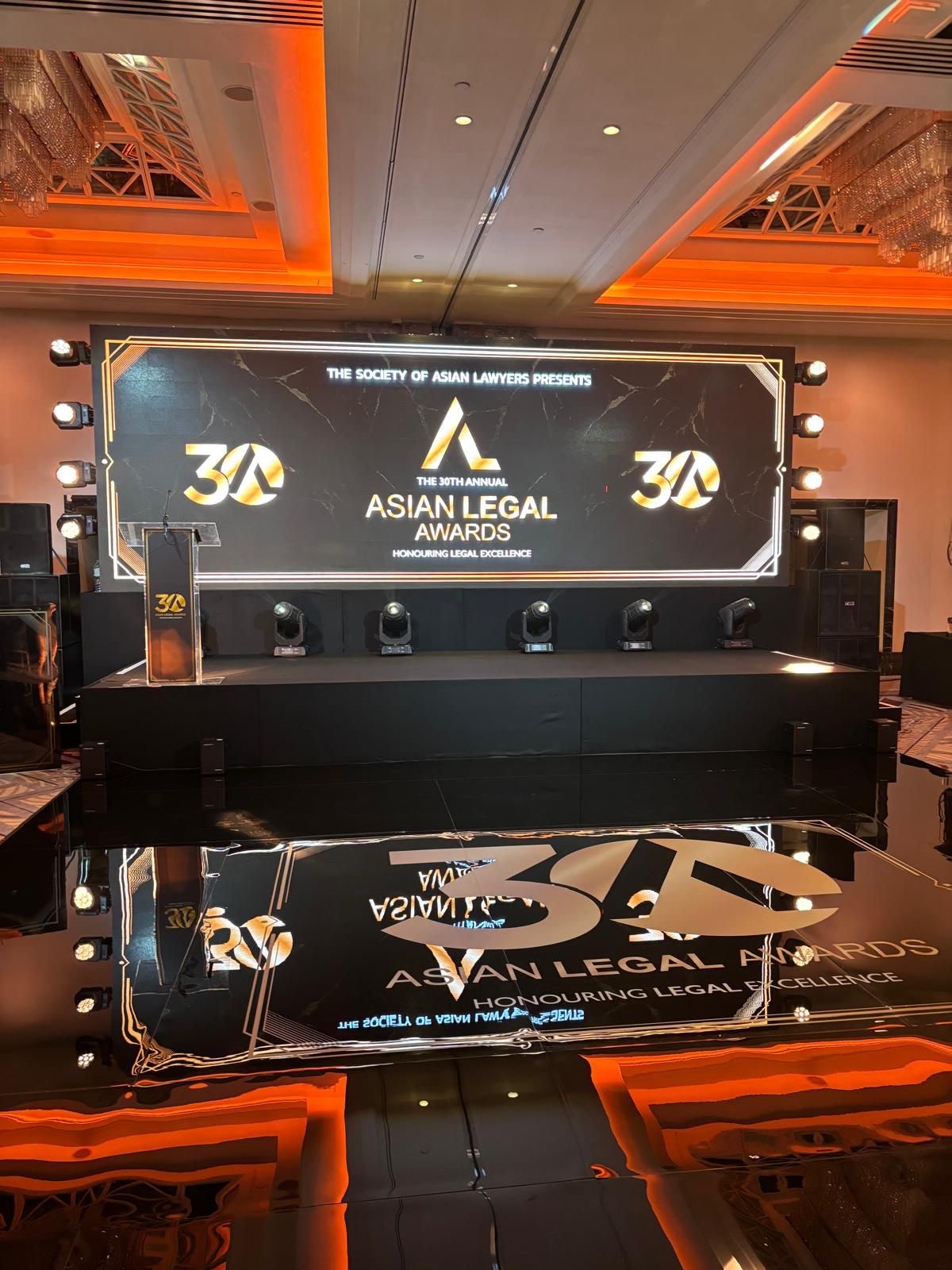
On Saturday night, Members of Halcyon Chambers attended the 30th Anniversary of the Society of Asian Lawyers Legal Awards at the Royal Lancaster Hotel in London.

The night was an absolute success and the team Asia Razaq-Miah, Jags DeSouza, Jaya Sudera, Sangita Talati Bodalia and our very own Sonya Kalyan lead by President Muntech Kaur put on a fantastic event which had everything.

Congratulations to all the nominees and the winners on the night.

We hope our guests enjoyed the evening as much as we did. We look forward to next year’s event

Presumption of parental involvement in the family courts to be repealed

Article by Emma Weaver

On 22nd October 2025, the current Government announced that it would be repealing the presumption that the involvement of a parent in a child’s life would further their welfare. The news comes following a final report published by the Ministry of Justice (“MoJ”) which can be found in full here: Review of the Presumption of Parental Involvement

The decision has been hailed by many domestic abuse organisations as a vital step to addressing deficits in the family justice system for victims of abuse.

The current law

The enactment of the Children and Families Act 2014 saw the insertion of the presumption which amended section 1 of the Children Act 1989. Section 1(2A) of the Children Act 1989 reads as follows:

“(2A) A court, in the circumstances mentioned in subsection (4)(a) or (7), is as respects each parent within subsection (6)(a) to presume, unless the contrary is shown, that involvement of that parent in the life of the child concerned will further the child’s welfare.”

As such, the starting point for the family courts is that the involvement of a parent in a child’s life will further their welfare. It should be noted, however, that there is no presumption as to what that involvement should entail and this could include direct or indirect involvement. The presumption can be rebutted as set out in the legislation but this must be demonstrated to the court. It could be argued that this places an unfair burden on a victim of abuse to demonstrate to the court that their ex-partner poses a risk to the child or children.

The presumption can be displaced where there is evidence of abuse to one of the parents by the other or to the child as a result of admissions, findings made by the family court or criminal convictions. Notably, the report provided by the MoJ outlines that even in cases where domestic abuse was present as a result of convictions, findings or protective orders, the court still made orders for the direct involvement of the perpetrator with the child or children.

Practice Direction 12J should also be at the forefront of the court’s mind where there are allegations of abuse or proven abuse and particularly, that children need not have witnessed domestic abuse to be considered a victim of the same.

The MoJ report

The report draws from research including the final report produced by the Harm Panel in 2020. The latter called for an urgent review of the presumption noting their view that the court had apro-contact culture’ and found that courts had a ‘deep-seated’ and ‘systematic’ commitment to maintaining contact between children and their parents.

The report also comes days after a review was undertaken by the Domestic Abuse Commissioner whereby it was found that domestic abuse was not considered to be ‘an active issue’ in 73% of hearings it observed and in 87% of the case files it reviewed. This is echoed by the sentiments of the MoJ report noting that the court often dismissed concerns of domestic abuse as being ‘historic’ or not being serious enough.

When will the presumption end?

Unfortunately, no timescales have yet been provided but the Prime Minister, Sir Keir Starmer, has confirmed the repeal “is going to happen”. The repeal will be presented to Parliament “as soon as Parliamentary time allows”.

What will the repeal look like in practice?

The repeal is going to result in a significant change in the family justice system and impact the way in which the court will make decisions regarding arrangements for children. However, it is likely that we will have to ‘wait and see’ how the repeal is going to change things on the ground. The court will still be required to consider the parties’ Human Rights including Article 8 (right to respect for private and family life) and the welfare checklist as set out in Section 1 of the Children Act 1989.

There are also cases where one parent is faced with another who is ‘implacably hostile’ and may even produce allegations to further support a narrative that the other parent should not been involved with the children. This poses the question of whether the repeal will be detrimental to those parties in such a scenario where they must convince the court that they should be involved in their child’s life without a presumption to assist them?

Conclusion

The repeal of the presumption of parental involvement marks a significant shift, reflecting a move away from presumptions about parental roles toward a more child-centred approach. While the original presumption aimed to ensure that both parents remained actively engaged in a child’s life after separation, its removal acknowledges that involvement is not always in the best interests of a child and at times, is unsafe.

Katie Wilkinson – Author of ‘A Practical Guide to Unfair Relationship Claims and Consumer Credit’


In an era where the regulation of financial products is more complex—and more essential—than ever, consumers and business borrowers alike are often left vulnerable to unfair practices. ‘A Practical Guide to Unfair Relationship Claims and Consumer Credit’ is a detailed guide that identifies the legal and practical realities of unfair relationships in credit agreements.

Drawing on key case law, extensive practical experience, regulatory frameworks, and real-world examples, this book explores how credit agreements can become exploitative, the legal protections available under the Consumer Credit Act 1974 (as amended), and the evolving role of the courts in ensuring fairness.

The book navigates through key legislation, and the concept of “unfair relationships,” showing how the law can both protect consumers and rectify wrongs. Practical case examples illustrate how these dynamics play out in real life, offering insights that are both critical and constructive.

This book is an essential resource for lawyers and consumer advocates. Whether you work within the legal system or engage with it from the outside, this book will sharpen your understanding of how justice can operate in the credit market.

About the Author

Katie WilkinsonKatie Wilkinson was called to the Bar in 2003, and has since practised as a Barrister. Katie specialises in consumer credit law, having been extensively involved in all of the well-publicised consumer arguments since 2006 including unfair bank charges, s.77-79 CCA 1974 requests, mis-sold insurance and investment products, s.140 unfair relationship claims, and secret commissions.

Katie has appeared routinely in unfair relationship claims relating to the sale of PPI, motor finance claims regarding the duties of car dealerships, and unfairness arising in the context of high value secured bridging loans. She also advises lenders and credit unions as to compliance issues affecting their contractual documentation.

Chambers Welcomes New Pupils


Halcyon Chambers is delighted to announce new pupils Emma-Justine Michaux and Lydia Pepper commenced their First Six Pupillages on 1 October 2025.

Emma-Justine and Lydia will be commencing a mixed Common Law Pupillage under the supervision of Katie Wilkinson and Muhammad Ul-Haq respectively.

Chambers wishes them every success.

Shared live with orders – Re AZ v BX

by Paige Procter-Harris

It has become increasingly common for applications to be made to the Family Court for a ‘Shared lives with order’ as opposed to ‘spend time with’ applications.

Overview

A parent can make an application under section 8 of the Children Act 1989 to ‘spend time with’ their child/ren and to set out the arrangements for when they will get to spend time with them. Alternatively, a ‘lives with order’ can be applied for which sets out with whom the child/ren shall live with and in doing so that parent is afforded the ability to take the child/ren abroad for up to one month without the permission of the court or the other parent, as well as anyone else that holds parental responsibility for the child/ren.

Parent’s may see a ‘live with order’ in their favour as a way to have control over the amount of time the child/ren will have with the other parent, including obstructing holiday’s aboard, as the parent without a ‘live with’ order will need the permission of the ‘live with’ parent or the court to take the child/ren abroad. It is apparent to the Family Court that when there are no safeguarding concerns there are many good reasons for both parents to be afforded the ‘live with’ order, even if the time split between the parents is not equal.

AZ v BX (Child Arrangements Order: Appeal) [2024] EWHC 1529 (Fam)

The recent decision in AZ v BX deals with the issues surrounding shared live with orders. In this case, the Judge made findings that: there were no safeguarding issues, the parents were incapable of working together, the parents failed to appreciate the importance of the other in the lives of the children and that the mother had controlled contact.

In the first instance the court made an order for the father to spend time with the children on alternate weekends during term time with an evening during the week and a 50% split of the school holidays. However, the Judge granted the mother the ‘lives with’ order.

This decision was appealed and the Appeal Court concluded that the following principles apply to a decision whether to make a ‘shared lives with order’ [77]:

  • The choice is not merely a question of labelling, and it is likely to be relevant to the welfare of the subject children. The principles of CA 1989 s1 must be applied.
  • A ‘shared lives with order’ will result in an unmarried father gaining parental responsibility which is a material difference to consider (although not applicable in this case).
  • “In every case the appropriate choice of order depends on a full evaluation of all the circumstances with the child’s welfare being the court’s paramount consideration”.
  • “The choice of the form of any lives with order should be considered alongside the division of time and any other parts of the proposed child arrangements order”.
  • “A shared lives with order may be suitable not only when there is to be an equal division of time with each parent but also when there is to be an unequal division of time”.
  • “It does not necessarily follow from the fact that the parents are antagonistic or unsupportive of each other that a shared lives with order will be unsuitable”.

The Appeal Court went on to consider at [81] that “the welfare advantages for each child of a shared lives with order in the present case would be that:

  • It would make it more difficult for either parent to regard themselves as being in control of contact or to seek to control contact – a problem that the Judge had specifically identified.
  • In particular, it would mitigate the effects of the mother’s attempts to control contact…It would thereby put the parents on an equal footing when seeking to make arrangements for the children.
  • It would also put the parents on an equal footing with regard to holidays abroad including during school holidays when the children are going to spend equal time with each parent.
  • A shared lives with order would signal to each parent that each was of value in the lives of the children, something the Judge had found each parent failed to appreciate.
  • It would also signal to the children that each parent has, in their capacity as parent, the same inherent importance in the children’s lives.
  • It would promote a sense of stability within the family: whatever the disagreements between the parents, the court had ordered that the children shall live with both of them.”

Summary

In consideration of AZ v BX, it appears there could be a shift towards more ‘shared live with’ orders being made, which can be seen as a positive move to putting parents on equal footing even if the split of time is not equal, with the children having an arrangement that accurately reflects their lived experience and highlighting the importance of both of their parents in their lives. It is evident that a ‘live with’ order in favour of one parent is not always the most favourable for the subject children and therefore the family court may seek to consider ‘shared live with’ orders more often rather than a default ‘live with’ order in favour of one parent when it serves no purpose to the best interests of the child/ren to exclude the other parent from a ‘live with’ order. It is also important to note that in such cases where the parent’s co-parenting relationship is acrimonious, a ‘shared live with’ order can help prevent control of contact and allow the subject child/ren to have a meaningful relationship with both parents.

For any booking enquiries, please contact the clerks at clerks@halcyonchambers.com

The views stated in this article belong to the writers in a personal capacity.  No warranty is given, express or implied, in respect of the contents of this article.  Nothing in this article is tendered as or is intended to be taken as legal advice and the contents should not be construed or relied upon as legal advice.  Specialist legal advice should always be taken in every case noting that the application of the law may vary according to the individual facts of the case and the nature of the dispute. 

Keywords: Private Law Children, Child Arrangements order, Live with Order, Shared Care Order, The Children Act 1989, AZ v BX (Child Arrangements Order: Appeal) [2024] EWHC 1529 (Fam)

Home Office withdraws asylum refusal ahead of hearing


We are pleased to confirm that the Home Office has withdrawn its refusal decision in respect of an Iranian national, following the Appeal Skeleton Argument prepared by Sonya Kalyan.

This was a post-NABA claim, in which the Home Office had already accepted a number of factors, leaving credibility as the sole issue.

In the Skeleton Argument, Sonya addressed:

  1. Past persecution at the hands of the morality police, including detention and mistreatment.
  2. Political activity during the nationwide protests following Mahsa Amini’s death, including participation in demonstrations, distribution of leaflets, and witnessing the arrest of a fellow protestor.
  3. Risk factors on return: Kurdish ethnicity, illegal exit, and known political profile.
  4. Relevant country guidance and case law including SSH and HR (Iran), HB (Kurds) Iran, and BA (Demonstrators in Britain).

The Home Office withdrew its decision prior to hearing.

If you require a detailed Appeal Skeleton Argument from one of our Immigration Specialist Counsel, please contact our clerks.

We accept instructions on both a private and controlled legal representation basis.

Home Office withdraws asylum refusal following the Appeal Skeleton Argument prepared by Sonya Kalyan

Home Office withdraws asylum refusal for young Iranian national ahead of hearing, following the Appeal Skeleton Argument prepared by Sonya Kalyan.

Arguments focused on:

  1. The lower asylum standard of proof and the need for anxious scrutiny in credibility assessments.
  2. Failure to conduct a child-focused best interests’ assessment under s.55, despite A being a minor (at the time) in local authority care.
  3. A’s protest in Iran (which led to his parents’ arrest) and his UK sur place activism, placing him at real risk as a young Kurdish dissident.

If you require a detailed Appeal Skeleton Argument from one of our Immigration Specialist Counsel, please contact our clerks.

We accept instructions on both a private and controlled legal representation basis.

Illegality in Credit Hire – the Court of Appeal hands down the decision in Ali v HSF Logistics Polska SP. Zo.o [2024] EWCA Civ 1479

Article by Simon Villau

In the ongoing battle between Defendant insurers and credit-hire companies, the Court of Appeal has handed down judgment in Ali v HSF Logistics Polska SP. Zo.o [2024] EWCA Civ 1479 landing a blow to Defendant insurers by curtailing a burgeoning line of defence.

A routine pleading in defences to credit-hire actions puts the Claimant to proof on the “legality and/or roadworthiness” of their vehicle, contending that a failing on either count gives rise to a defence by reason of illegality.

This engages the ex turpi defences, which are of general application to tortious claims; ex turpi oritur actio (which is a potential defence to the entire claim) or ex turpi oritur damnum (for specific heads of loss), per Hewison v Meridian Shipping Services PTE Ltd [2002] EWCA Civ 1821.

The doctrine concerns the circumstances in which the court will, for reasons of public policy, decline to assist those Claimants whose causes of action are tainted by an illegal or immoral act. However, it is not a binary system whereby the mere fact of an illegal act precludes a Claimant’s otherwise legitimate claim for damages.

The criminal offence must be sufficiently connected to the cause of action and proportionate to the decision to accede to the ex turpi defence. Therefore, a qualitative assessment of the Claimant’s illegal conduct is required.

The leading authority on the modern law of ex turpi is Patel v Mirza [2016] UKSC 42, [2017] AC 467. Lord Toulson JSC said at paragraph 101:

“I would say that one cannot judge whether allowing a claim which is in some way tainted by illegality would be contrary to the public interest, because it would be harmful to the integrity of the legal system, without (a) considering the underlying purpose of the prohibition which has been transgressed, (b) considering conversely any other relevant public policies which may be rendered ineffective or less effective by denial of the claim, and (c) keeping in mind the possibility of overkill unless the law is applied with a due sense of proportionality. We are, after all, in the area of public policy.”

Defendant insurers often rely upon the unreported decision of HHJ Dean in the case of Agheampong v Allied Manufacturing (London) Ltd [2009] Lloyd’s Rep IR 379, where the claim failed where the Claimant did not have motor insurance.

However, in the hotly contested arena of credit hire, a further line of defence has emerged from the debate centred on the illegality argument, the so-called “causation defence”, a label reluctantly adopted by Stuart-Smith LJ in Ali v HSF Logistics.

In short, the premise of the defence is that the Claimant has not suffered a compensable loss because they are not entitled to be put in the position of having a car which they could legally use while their car was being repaired, because they could not legally use their own car at the time.

In Agbalaya v London Ambulance Service (Central London County Court, 17 February 2022) before HHJ Lethem, the causation defence was successful. The argument was simply that the Claimant was seeking compensation for a vehicle she was not permitted to use, “[h]ence there is nothing to compensate.” HHJ Lethem drew a distinction between a car that could be driven (“a driveable car”) and a car that could be lawfully used on the highway (“a useable car”).

This represented the advent of sub-species of the illegality defence unique to credit hire, given the nature of such claims. Credit hire is, of course, an issue of mitigation of loss of use of a vehicle. It is the “loss of use” which is significant, because a Claimant driving illegally has obviously not suffered the loss of lawful use of a vehicle.

In Ali v HSF Logistics, this matter came to a head, and Stuart-Smith LJ gave the leading judgment, which appears to have closed down this avenue for Defendant insurers.

The decision below

In Ali v HSF Logistics, the vehicle did not have a valid MOT at the time it was damaged in contravention of section 47(1) of the Road Traffic Act 1988.

Recorder Charman maintained the distinct line of defence, undoubtedly to the joy of Defendant insurers at the time. At paragraph 50, he said:

“[The Claimant’s] main submission in response was that the causation defence was in substance the illegality defence in another form. I disagree. The causation defence is, in my judgment, a distinct defence which is capable of applying only to the credit hire element of the claim because it is based on the distinct nature of the credit hire claim.

The diminution in value claim and the recovery claim are claims for losses caused directly by the accident itself in the case of the former, and an expense necessarily incurred in the case of the latter, because unless the car was recovered, it could not be repaired. The credit hire claim is different. It is a claim founded in the principle of mitigation of loss. If it succeeds, it does so because it is an expense reasonably incurred by a claimant in mitigation or avoidance of a claim for loss of use of their vehicle. The question of whether a claimant acts reasonably in hiring a replacement vehicle is separate from any issue of illegality.”

And at paragraph 58, he explained that the credit hire claim failed:

“because he had no loss of use claim, by reason of not having a vehicle which he was entitled to use on the public highway at the time of the accident, by reason of the absence of an MOT certificate, and he has not established that he could and would [have] obtained a valid certificate at any time during the hire period.

Before the Court of Appeal

The matter came to a head before the Court of Appeal when Stuart-Smith LJ rejected this new line of defence on the basis that the underlying premise of the causation defence involves a fundamental misconception of a claim for loss of use. At paragraph 47:

“In my judgment, there is a fatal flaw at the heart of the Defendant’s submissions on the causation defence, which is the assertion that the Claimant has suffered no loss as a result of the Defendant’s tort. The error stems from a failure to appreciate the nature of a claim for “loss of use”. As explained by Lagden at [27], the loss which falls to be compensated in such a case is inconvenience: … The defendant’s tort causes the claimant to be deprived of the use of an item of property, which causes inconvenience in the form of inability to use it for private transport. The fact that a claimant does not have a valid MOT certificate for the car does not alter the fact that they have been deprived of its use or the fact that this deprivation would have caused inconvenience but for the hiring.”

Stuart-Smith LJ highlighted that the causation defence would see any technical or minor criminal offence, such as a “non-conforming number plate”, defeat a claim for credit hire. He clarified that it is the loss of use of the convenience of a private vehicle, rather than the loss of use of a lawfully drivable vehicle, which is the true loss in a credit hire claim.

He considered that the causation defence would create a binary system which could potentially see Defendant insurers relying on such minor criminal infractions to avoid paying damages. However, he highlighted that the ex turpi defence is a creature of public policy, whereby the court may decline to assist a Claimant who has engaged in criminal behaviour where it would be repugnant and/or an affront to public decency to do so. He recognised that not every type of minor criminal offence is likely to engage public policy in such a way, and therefore, the causation defence was seen as a mechanism of circumventing the crucial ingredient of proportionality.

At paragraph 55, he stated:

“I am quite unable to accept that the causation defence is a proportionate response to the problem of claimants who have claims based on inconvenience and the need for suitable transport but who have, in one way or another, committed minor offences in relation to their damaged vehicle. In my judgment, the causation defence is ex turpi causa by another name but without the essential requirement of proportionality.”

Consequently, Stuart-Smith LJ has effectively shut down this offshoot of ex-turpi defence, and for the time being, a line has been drawn under the causation defence.

New Tenants Join Chambers


Halcyon Chambers is delighted to announce that Simon Villau and Sonya Kalyan have accepted offers of tenancy.

This comes after both successfully completed pupillage under the supervision of Katie Wilkinson and Tony Muman respectively.

During their Pupillage year, both Sonya and Simon gained experience in all of Chambers’ core specialist areas including Civil, Family and Immigration Law. Both have proved incredibly popular with our Instructing Solicitors and already have experience of work above the level of their Call.

Everyone at Halcyon Chambers welcomes both as Members of Chambers and we look forward to seeing their careers grow over the coming years.

Any enquiries in relation to the availability of either Sonya or Simon should be directed to the Clerks.

Credit Hire Update – Guidance from the Court of Appeal on Non-Party Costs Orders against Credit Hire Organisations

Article by Christine Rutkowski

Yehuda Tescher v. Direct Accident Management and AXA Insurance UK Plc v. Spectra Drive Limited [2025] EWCA Civ 733

Two recent appeals have considered the question of when and in what circumstances a non-party credit hire company should be made liable for a Defendant’s costs in a credit hire claim.  It is worthy of note that the guidance provided by the Court of Appeal considered cases where the Claimant was protected by Qualified One-Way Costs Shifting (QOCS) and where the Claimant was alleging that they were impecunious.

Both cases had their origins in claims brought for damages including personal injury and credit hire following road traffic collisions; therefore QOCS applied.  In each case, albeit for different reasons, costs orders were made against the Claimant and in favour of the Defendant. However, due to the effect of QOCS, neither of those costs orders were enforceable. The Defendants each applied for a non-party costs order (NPCO) against the credit hire companies. Those applications were refused; however permission to appeal was granted and the cases were sent straight to the Court of Appeal for consideration (given the disparity of decisions on NPCOs at County Court level).  The Justices allowed the appeals and gave guidance as to when non-party costs orders would be made in QOCS cases where credit hire charges were included.

Background to Tescher v. Direct Accident Management Limited (DAML)

On 19 November 2018 the Defendant, Mr. Tescher’s vehicle struck the Claimant (Mr Quesda’s) motorcycle. The Claimant signed successive credit hire agreements with DAML. In due course, the Claimant brought proceedings. The Particulars of Claim included a claim for general damages for personal injury and the sum of £19,633.36 for credit hire charges incurred over a period of 88 days hire. Those credit hire charges represented over 85% of the value of the special damages claim. The Claimant pleaded a positive case that he was impecunious in accordance with Lagden v O’Connor [2004] 1 AC 1067.

The matter was listed for a Fast Track trial before District Judge Swan in the County Court in Clerkenwell & Shoreditch on 08 December 2022 where the Judge dismissed the claim and directed that the Claimant pay the Defendant’s costs, not to be enforced without permission of the court, as QOCS applied. However, directions were given for DAML to be joined as a Second Defendant for the purposes of considering an application for an NPCO.

The application came before District Judge Jeffs on 10 May 2023, who dismissed the application for an NPCO, as he was not satisfied that DAML was the “real party” or that DAML had caused costs to be incurred, which otherwise would not have been incurred save for DAML’s involvement. Mr. Tescher sought permission to appeal.

Background to AXA Insurance UK Plc v. Spectra Drive Limited (Spectra)

On 23 October 2019, the Claimant (Ms. Nicola Smith) was involved in a road traffic incident with a vehicle insured by the Defendant (AXA) and liability was admitted.  The Claimant’s vehicle was written off and on the same date, she entered into a credit hire agreement with Spectra. The credit hire lasted for 89 days. On 24 August 2020, the Claimant’s issued proceedings directly against AXA and her claim included general damages for pain, suffering and loss of amenity (PSLA) as well as a claim for special damages of £16,160.94 – the lion’s share of which was made up of credit hire charges. Again, the Claimant pleaded impecuniosity and sought to recover from AXA the full credit hire rate and as in the DAML case, all aspects of the claim for credit hire charges were put in issue by AXA.

Despite making a claim for 89 days of credit hire, there was evidence that the Claimant had insured another vehicle after 10 days, which (AXA asserted) proved that the Claimant had been fundamentally dishonest in bringing her claim.  The Claimant subsequently discontinued her claim on 28 May 2021 – later explaining that she had simply done what her solicitors “told her” to do. The usual costs order under CPR r. 38.6(1) followed – with the Claimant ordered to pay the Defendant’s costs not to be enforced without permission of the court pursuant to QOCS.

On 29 June 2021, AXA brought an application for two orders. One was an order setting aside QOCS protection on the grounds of fundamental dishonesty. The other was for an NPCO against Spectra.

The application came before Deputy District Judge Carson on 18 February 2022. The Claimant represented herself with Spectra and AXA respectively represented by Counsel. DDJ Carson found that the Claimant had not been fundamentally dishonest because the vehicle that she had insured 10 days after the accident had not been available for her to use until she received the benefit of the total loss claim and that she had used the hire car during the claimed period.

The NPCO application was adjourned and after a second hearing; further written submissions and a substantial delay; an order was made in AXA’s favour requiring Spectra to pay 65% of AXA’s costs.

On appeal to HHJ Gargan, various findings of fact made by DDJ Carson were overturned and AXA’s application for a non-party costs order was refused.  In his judgment, HHJ Gargan concluded that Spectra was the principal beneficiary of the proceedings throughout and held that there were some factors which distinguished this case from a standard credit hire claim.  However, what the Judge called AXA’s “good fortune in escaping a judgment and costs” was also considered a factor which suggested that it would not be ‘just’ to make a costs order against Spectra.

The Appeals

Permission to appeal to the Court of Appeal was granted in both cases and it was directed that they be conjoined.  The Appellants in both DAML and Spectra contended that NPCOs ought to have been made against the respective credit hire companies.

The Court of Appeal considered in detail the law relating to Credit Hire in general at [20 – 24]; NPCOs at [25 – 33]; QOCS and its exceptions at [34 – 45]; authorities on NPCOs generally and High Court decisions on NPCOs made in credit hire cases after the implication of QOCS at [46 – 64], following which Lord Justice Birss (giving the leading judgment) gave guidance applicable to NPCOs in credit hire cases – suggesting that a two-stage process should be approached by the court in the exercising of its discretion in such cases and applications as follows:

It should firstly be asked whether in the circumstances an NPCO of some kind should be made against a credit hire company (which involves examining if the non-party costs jurisdiction is engaged) and secondly, if so, the amount of costs awarded should be decided (in so doing, determining what a ‘just’ costs order would be – including questions of attribution).

In the DAML case, it was held that the credit hire company is the real beneficiary of the claim for damages for the credit hire charges and had tacit control over the litigation. The causation and control aspects of the test to engage the NPCO jurisdiction were therefore satisfied. There were no other special circumstances which suggested that no order should be made at the first stage and an NPCO ought to be made.  Regarding the second stage of the exercise, it was found that as DAML’s credit hire charges were several times larger than the damages for personal injury, DAML were ordered to pay all of the Defendant’s costs.

In the case of Spectra, it was held that an NPCO would be the ‘just’ outcome.  The fact that the claim which was discontinued would or might well have succeeded does not justify a different order.  Further, as the DDJ’s original order required Spectra to pay 65% of the costs and this had not been challenged in respect of apportionment, the original NPCO was restored.

Conclusion

The Court of Appeal confirmed that the elements of a credit hire case – when taken together – are enough for a court to conclude that “absent some reason why not” an NPCO against a credit hire company is likely when a costs order is made against a QOCS protected Claimant.

In relation to Stage 1 of the process, where the claim includes a claim for hire obtained on credit (i.e. where payment is deferred by reference to an action for damages) and there is an allegation that the Claimant is impecunious, for all intents and purposes litigation (including settlement) is the only realistic means by which the credit hire company will be paid for hire.  It therefore follows that the credit hire agreement (for which the credit hire company is responsible) is a “fundamental cause of the legal costs incurred by the Defendant” which is sufficient to satisfy the requirement for causation for NPCO purposes.  A ‘but for’ causation approach was considered unnecessary.  Further, Lord Justice Birss found that a credit hire company has sufficient control of the litigation as a result of the structure of credit hire arrangements – absolute control is not required.

It was also found that “as a matter of reality” (both practically and economically) a credit hire company is the real beneficiary of the litigation for damages in respect of credit hire.  They are essentially the ‘real party’ in a claim which includes credit hire charges.

As for Stage 2 (the amount of costs payable), in cases where the credit hire claim is several times larger than the personal injury claim (as was the case in both DAML and Spectra), the Court of Appeal found that an order for all the Defendant’s costs would be payable – absent some special feature.

The Court of Appeal’s judgment can be found here.

Tony Muman successfully defends Home Secretary in Civil Penalty Appeal


Tony MumanIn an appeal against a civil penalty of £10,000 imposed on J. N. Dairies Limited for allegedly employing Veerpatap Singh, who was discovered to be working illegally in the UK, Tony Muman was instructed by the Government Legal Department for the Secretary of State.

J. N. Dairies contested both the liability for the penalty and its amount, while the Secretary of State asserted that Singh was employed by J. N. Dairies during the relevant period.

Her Honour Judge Wall heard the appeal over two-days sitting at the Birmingham County Court.

Factual Background

J. N. Dairies is a family-owned dairy business. On 2 November 2023, immigration officers entered the business premises and encountered Singh cleaning a van. Singh had a complex immigration history, having overstayed his visa and claimed asylum, which was subsequently refused.  The central issue was whether Singh was indeed employed by J. N. Dairies or present for other reasons.  J. N. Dairies argued that Singh was on site as a favour to his uncle, an employee of J. N. Dairies, and not as an employee.

Legal Framework

The Immigration, Asylum and Nationality Act 2006 prohibits the employment of individuals who do not have the right to work in the UK.  The Secretary of State can impose penalties for violations of this provision.  The appeal process allows employers to contest the imposition of penalties based on liability or the amount of the penalty.

Burden of Proof

A preliminary issue arose as to which party bore the burden of proof.  HHJ Wall was asked to rule on the issue determinatively for the first time in a civil penalty appeal issued for illegal working.

It was common ground that the standard of proof to be applied is the balance of probabilities, which is the usual standard in civil proceedings. The primary issue in contention was the allocation of the burden of proof.

Leading Counsel for J. N. Dairies contended that the burden of proof rested with the Secretary of State relying on the statutory scheme’s reference to the appeal being by way of re-hearing (see s17(3) IANA).  His contention was that since a penalty is only imposed if the Secretary of State satisfies itself of the conditions for its imposition, it must therefore be for the Secretary of State to satisfy the Court in a re-hearing.  He also argued that the State had imposed a financial penalty and as such the State bore the burden of proof to establish the factual basis for the penalty.

Tony Muman argued that the statutory language in s17(1) IANA explicitly places the burden on the employer to show they are “not liable”, and that the reference to a “re-hearing” does not imply that the Secretary of State must bear the burden of proving its case again.  Instead, it means that the court undertakes a merits-based approach to the appeal, considering all evidence presented, including evidence not before the Secretary of State when the penalty was imposed (see s17(3)(b)).  This position is supported by appellate-level authorities, particularly the Court of Appeal’s guidance in Akbar v Secretary of State for the Home Department EWCA Civ 16 and Khan v HM Revenue and Customs EWCA Civ 89.  In Akbar, the Court observed that s17(1) “places the burden on an employer to demonstrate to the court that it is not liable” (paragraph 8).  In Khan, the Court stated that the general principle is that where a statute provides a right of appeal against enforcement action by a public authority, the burden of establishing the grounds of appeal lies with the employer (paragraph 70).  This principle is reinforced where the relevant facts are within the employer’s knowledge (paragraph 71).

Upon reviewing the arguments and authorities, HHJ Wall concluded that Tony Muman’ssubmissions were correct.  In this appeal, it was for J. N. Dairies to prove its case.  The weight of appellate authority recognises the general principle that an appellant bears the burden of proof in a civil penalty appeal.  The “re-hearing” of the decision to impose the penalty refers to a merits-based approach that is not limited to the material before the Secretary of State and does not reverse the usual burden of proof on an appeal.

On instruction Tony Muman agreed that this general principle can be disapplied if there is something in the statute or the nature of the appeal that supports a contrary position.  However, neither applied in this context.  Section 17(1) IANA provides that the employer may appeal on the grounds that they are not liable, are excused payment, or the penalty amount is too high.  This statutory wording is consistent with the general rule that the employer must establish the grounds of appeal.

The real nature of the appeal is whether Singh was employed by J. N. Dairies.  This issue was peculiarly within the knowledge of J. N. Dairies, not the Secretary of State.  Therefore, there was no basis for departing from the usual approach that it is for the employer to show that it is not liable for the penalty.

Similarly, there is no basis for departing from the usual approach when considering the appeal against the quantum of the penalty.  Neither the statutory language nor the essential nature of the appeal provides any basis for doing so.  Further, where an employer wishes to present additional factors to support a departure from the penalty approach set out in the Code, those factors are within the employer’s knowledge, not the Secretary of State’s.

Findings and Reasons

HHJ Wall held that Singh was indeed employed by J. N. Dairies.  The evidence presented, including Singh’s actions at the time of the encounter and the context of the intelligence leading to the immigration officers’ visit, supported this finding.  The explanation provided by J. N. Dairies regarding Singh’s presence was found to be unconvincing.

  • The encounter occurred while Singh was engaged in tasks typically performed by an employee.
  • The timing and circumstances of the encounter suggest regular employment rather than a casual visit.
  • The alternative explanation offered by J. N. Dairies was dismissed due to inconsistencies and lack of credible evidence.

 Amount of Civil Penalty

HHJ Wall also addressed the second ground of appeal, namely the amount of the civil penalty to be paid.  The court recognised that there was a discretion to impose a penalty at all, but held that the £10,000 penalty was appropriate given the circumstances of the case.  J. N. Dairies arguments for mitigation, including their cooperation with authorities and the social context of Singh’s presence, were deemed insufficient to justify a reduction.

Conclusion

The appeal was dismissed, and the civil penalty of £10,000 upheld with J. N. Dairies having to pay the Secretary of State’s costs of defending the appeal.


Tony Muman is an expert in Civil Penalty Notice appeals and accepts instructions for both Employers and the Home Office. 

For any booking enquiries relating to Tony Muman please contact his clerk cridley@halcyonchambers.com

Alleged Kidnap, Torture, Rendition and Billion Dollar Fraud: a case straight out of a spy novel


Tony MumanRamby De Mello leading Tony Muman and Susana Ferrín of No5 Barristers’ Chambers defend claim in the High Court alleging that the Government of India hatched or maintained a plan in the UK to forcibly abduct and smuggle by yacht to a Caribbean island Mr Mehul Choksi for the purpose of extracting a false confession under torture and to unlawfully render him to India where he is wanted over his alleged involvement in one of India’s biggest bank frauds, said to be in the region of $1.8billion.

In a very high profile case, Mr Mehul Choksi alleges that the Government of India conspired with named individuals and entered into an unlawful means conspiracy in the UK to unlawfully render him to India from the Caribbean.  For a more detailed background of the alleged facts, see the decision of Robertson J in the Eastern Caribbean Supreme Court, Antigua and Barbuda.

Ramby, Tony, and Susana act for the Fifth and Sixth Defendants, instructed by Galwinder Kang at Murria Solicitors.

On Monday 16 June 2025 Mr Justice Freedman conducted a case management hearing, dismissing the Indian Government’s application that its State Immunity application should be bifurcated from the jurisdictional complaints raised by the other defendants.

The case raised important points about jurisdiction and immunity which are yet to be decided.

The case will next come before the High Court over a five-day hearing to determine arguments on State Immunity and Jurisdiction.

For press reports, see:

For any booking enquiries for Ramby or Tony, please contact the clerks at clerks@halcyonchambers.com, or on 0121 237 6035.

Misrepresentation in Credit Hire – Game over for enforceability defences?

Article by Jamie Hughes

Mr Joshua Parker v (1) Skyfire Insurance Company Limited (2) Spectra Drive Limited [2024] EWHC 1060 (KB)

This case concerned a High Court appeal from the County Court at Liverpool and considered, primarily, an application by the Defendant for non-party disclosure under CPR 31.17. The underlying claim included a claim for credit hire following a road traffic accident.

The disclosure sought included recordings of telephone calls said to include representations made to the Claimant in advance of him signing the hire documents. While the focus of the original judgment and the appeal was on the application itself, this necessitated discussion about whether such evidence was likely to support or adversely affect either party’s case. Almost inevitably, this led to a discussion about misrepresentation in credit hire in more general terms.

The court made a number of important observations when considering the enforceability of hire contracts based on alleged misrepresentations:

  • It is not uncommon in credit hire cases for the claimant to be told -incorrectly – that he or she will have no personal liability for the hire charges. (§24)
  • There was rightly no suggestion in this case that the contract was unenforceable or invalid because Mr Parker did not understand what he was signing. It is well-established that it unnecessary for a contracting party to have understood the true nature of the contract in order to be bound by it: Burdis v Livsey [2002] EWCA Civ 510 (§31)
  • The effect of a misrepresentation is only to render a contract voidable at the option of the innocent party. It is not thereby rendered automatically unenforceable. A voidable contract is valid unless and until it is avoided. Avoidance requires the innocent party to take some step to rescind the contract. Rescission is not available unless it is possible to make restitutio in integrum. A contract cannot be rescinded if it has been affirmed by the innocent party with full knowledge of the facts and of his or her right to avoid (§32).

The court highlighted that the two most relevant questions above related to affirmation and restitution.

As regards affirmation, the Court stated that the correct question was whether the Defendant could point to a real prospect that the contract is both capable of being avoided in principle, and, if so, might in fact be avoided by the Claimant. This would be a factual question to be addressed in each individual case. In Skyfire, the Court found that Mr Parker had brought his claim to recover the charges in express reliance on the hire contract and maintained his opposition of the disclosure application through counsel. The Court therefore concluded that there was no basis for suggesting he might seek to avoid the contract having not done so to date.

However, the Court went on to consider whether avoidance is an option open to the Claimant at all if restitution can no longer be made. The hire agreement in this case was a contract for services which had been fully performed. Mrs Justice Dias referenced Chitty in saying:

‘In this respect, a contract for services is very different from, for example, a contract for the sale of goods where the goods themselves can be returned, even if it might be necessary to make some allowance for depreciation. Although there are indications that the courts might be prepared to adopt a slightly more flexible approach to restitution than in the past, it is still the case that a fully performed contract for services cannot be rescinded: Chitty (op.cit) paragraphs 10-139 to 10-140”

‘This, it seems to me, is an insuperable obstacle to avoidance of the contract which exists independently of any misrepresentation or affirmation. It follows that even if the application were granted and even if the disclosure fully supported a case of misrepresentation, Skyfire would be unable to establish any circumstances in which Mr Parker would be relieved of his liability under the contract with Spectra’

Misrepresentation arguments are made on a daily basis in county courts up and down the country in credit hire trials, however courts very rarely address the underlying contractual principles and instead focus almost entirely on whether there has been a factual misrepresentation. This decision is a stark reminder that the underlying legal principles remain fiercely relevant and should be engaged with on each occasion. The High Court was at pains to point out that “it is not possible to lay down any general rules” (§29) however it is difficult to see how, in light of the passages referred to above, misrepresentation defences can succeed in relation to hire agreements which have been fully performed.

The Supreme Court hears much anticipated Motor Finance Case

Article By Harry Owen

Within the last week (01 April – 03 April 2025) the Supreme Court heard the three linked appeals of Johnson v FirstRand Bank (UKSC 2024/0158), Wrench v FirstRand Bank (UKSC 2024/0159) and Hopcraft & Anr v Close Brothers UKSC 2024/(0157).

Ultimately, the question being considered is what duty, if any, motor dealers owe to consumers when selling finance or whether finance was mis sold, and what compensation, if any, is due to the consumer.

The primary position advanced by Close Brothers and FirstRand Bank are, broadly, that the Motor Dealer is not a fiduciary, and in the alternative, if the Motor Dealer is a fiduciary, that consumers who complain should not be entitled automatically to a full refund of commissions paid.


Motor Dealer as a Fiduciary

The argument presented on behalf of consumers is that when it comes to selling finance, a Motor Dealer takes on a responsibility to act in a consumer’s best interest to the exclusion of all others, including their own.

The role of a fiduciary carries with it a duty either as a full fiduciary (i.e. to act solely in the best interests of the consumer) or alternatively, a lesser duty to provide customers with advice on finance on a disinterested basis. In either event, if acting as a fiduciary, and if a Motor Dealer is to receive commission from a finance company, the Motor Dealer must first obtain consent to do so from the consumer.

The primary basis for the appeal states that the Court of Appeal erred in finding that Motor Dealers owed a fiduciary duty to the consumer when selling finance.

Arguments in the Alternative

The alternate arguments put on behalf of Close Brothers and FirstRand Bank are applicable only if the Supreme Court places an enhanced duty on Motor Dealers.

The arguments forwarded create some tension between finance companies and Motor Dealers – potentially pushing the liability for any compensation away from lenders and toward the Motor Dealers.

Close Brothers and FirstRand Bank made further submissions in relation to secret commissions and, in particular, the case of Hurstanger Ltd v Wilson [2007] EWCA Civ 299. Close Brothers and FirstRand Bank proposed that different remedies should be considered in circumstances where a Motor Dealer disclosed the existence of commission, but not the amount.

This is important and likely to affect a great number of potential claims, as the majority of Motor Dealers relied upon standard paperwork which included disclosure of the potential existence of commission.

Submissions were made regarding the case of Plevin v Paragon Personal Finance Ltd [2014] UKSC 61 and the concept of an unfair relationship under s140 of the Consumer Credit Act 1974. In Plevin it was found that a failure to disclose excessive commissions received in relation to Payment Protection Insurance payments, could result in an unfair relationship, entitling a consumer to compensation. Close Brothers and FirstRand Bank sought to distinguish the case of Plevin from the current case, on the basis that the nature of the commission was too dissimilar to provide a direct comparison.

The National Franchised Dealers Association

The Supreme Court also heard submissions from The National Franchised Dealers Association (NFDA), an intervenor in the case. The NFDA made submissions on behalf of Motor Dealers, setting out a background to the sales process, arranging of finance and the commercial realities of vehicle sales.

The NFDA focused on the Court of Appeal’s finding that the duties arising during vehicle sales were entirely separate from those arising when finance brokering, describing two distinct parts of the sale, with the Motor Dealer firstly dealing with the sale of the vehicle and then moving into an entirely separate role as a broker. The NFDA portrayed a more complicated and closely entwined process, where both the vehicle sale and the finance brokering take place simultaneously.

Submissions from both Close Brothers; FirstRand Bank and the NDA, averred that the Court of Appeal had gone too far in creating a fiduciary relationship between the Motor Dealer and the consumer that had never previously been present. This position was later echoed by the Financial Conduct Authority, during its submissions.

Johnson, Wrench and Hopcraft

Submissions on behalf of Johnson, Wrench and Hopcraft, took a differing approach, focusing to a much greater degree on the claim of bribery and the liability for and quantum of awards.

The focus on bribery was significant, perhaps because if it enables a claim to be made directly to the finance companies for cancellation of the contract and return of all monies and payment of the commission to the consumer. If found, this would greatly increase the potential quantum of claims made by consumers.

There were limited submissions by Johnson, Wrench and Hopcraft attempting to establish that there was a fiduciary relationship, or a duty to provide disinterested advice, suggesting that Motor Dealers have undertaken a classic finance broker role in assessing a consumer’s needs and recommending products that are appropriate.

This approach resulted in numerous judicial interventions, from seeking clarification as to the precise nature of the duty owed to how these circumstances could be distinguished from similar sales situations where a fiduciary relationship does not exist.

Representations were also made by Johnson, Wrench, and Hopcroft averring that an unfair relationship under s140A of the Consumer Credit Act 1977 was created in the circumstances of the three cases under review. Johnson, Wrench, and Hopcroft attempted to draw a direct analogy between Plevin and the current case as well as to define the calculation of the commission by reference to the cost of the finance and not the finance agreement as a whole.

FCA Submissions

The FCA made submissions as an intervener, straddling the positions forwarded by the parties. The FCA expressed support for the contention that Motor Dealers are not a fiduciary, but conversely supported the contention that Motor Traders have a duty to provide disinterested advice in order to protect consumers. The FCA averred that the application of a Plevin– like approach to the current facts was appropriate and suggested that the calculation of the commission as a percentage of the cost of finance and not the full cost of the loan was the most suitable approach.

The FCA provided expert guidance on the regulatory regime and their interpretation and expectations of a Motor Dealer’s role and the nature of the relationship between the dealer, the consumer, and the finance provider.

Conclusion

Much opinion has been published in recent days, speculating as to the potential judgment of the Supreme Court. For every opinion that confidently predicts a victory for Close Brothers and FirstRand Bank, you will find one confidently predicting a victory for Johnson, Wrench, and Hopcroft. Perhaps tellingly, for each of those opinions, you will find a dozen or more, non-committal suggestions that the case could be determined either way.

Perhaps an outright ‘victory’ for either party is unlikely, with the prospect of an intermediate position being established as the most likely outcome. At this stage, at least those interested can take comfort from the fact that the next step towards clarity is on the horizon. The Supreme Court has indicated that judgment could be handed down as soon as July 2025, with the FCA anticipating publishing guidelines around 6 weeks thereafter, as necessary.

Until then, the wait continues…

Namibian national: Asylum appeal allowed

Sonya Kalyan recently successfully represented a Namibian national before the First-tier Tribunal (Immigration and Asylum Chamber) in Newport.  This blog highlights the importance of robust legal argument and thorough case preparation in asylum appeals.

Sonya was instructed in this matter by Migrant Legal Project, a specialist organisation dedicated to providing expert legal advice and representation to vulnerable migrants, including asylum seekers, victims of trafficking, and those facing removal from the UK.  Their tireless commitment to access to justice for those in need was instrumental in achieving this positive outcome.

Background

The Appellant, referred to as ZVR due to an anonymity order, is a Namibian national who sought asylum in the UK.  She made her initial asylum application on 20 December 2022, which was refused by the Secretary of State for the Home Department (SSHD) on 9 January 2024.  Because ZVR’s application was made after 28 June 2022, it was considered under the provisions of the Nationality and Borders Act 2022 (NABA 2022), which introduced significant changes to the asylum framework, including a two-stage test for assessing refugee status.

ZVR’s claim was based on her fear of persecution due to her experiences as a victim of gender-based violence (GBV) and the systemic failures of the Namibian state to provide sufficient protection.

The appeal was heard on 7 March 2025 before First-tier Tribunal Judge Boyes, with the SSHD as the Respondent.

The Legal Framework

The appeal was considered under the Nationality, Immigration, and Asylum Act 2002 and the NABA Act 2022. The key legal issues were:

  • Whether ZVR’s claim fell within the scope of the Refugee Convention.
  • Whether she had a well-founded fear of persecution for a Convention reason (namely, membership of a particular social group).
  • Whether there was a sufficiency of protection in Namibia.
  • Whether internal relocation was a viable option.

The Tribunal’s considerations and findings

The Tribunal noted that while the SSHD conceded ZVR’s nationality and the fact that she had suffered GBV, she did not accept that ZVR was claiming asylum for a Convention reason.  Specifically, the SSHD argued that women in Namibia do not form a Particular Social Group (PSG) under the Refugee Convention, relying on their Country Policy and Information Note (CPIN).  The SSHD argued that while ZVR was a victim of domestic violence, this alone did not amount to persecution for a Convention reason.

Sonya robustly argued against this position, submitting that ZVR possessed an innate characteristic beyond simply being a woman.  She was not only a woman but a victim of severe domestic and sexual violence in a society that does not provide adequate protection for such victims; highlighting that ZVR’s status as a survivor of GBV, combined with cultural and legal norms in Namibia, meant that she belonged to a PSG.

The Tribunal agreed, finding that ZVR’s experiences and the societal context in which they occurred established her membership of a PSG under the Refugee Convention, relying on jurisprudence such as Islam and Shah [1999] UKHL 20.

Sonya went on to argue, relying on expert evidence, that there is no sufficiency of protection in Namibia.  The expert report detailed how the dual judicial system, which includes both state and traditional courts, often results in GBV cases being treated as private matters, leaving victims without recourse.  It also outlined the significant cultural barriers preventing women from seeking protection, including societal norms that reinforce male dominance and discourage intervention by law enforcement.

The Tribunal accepted that, despite the existence of legal protections on paper, the reality was that state authorities failed to provide effective protection for victims of GBV in Namibia.

Sonya went on to argue that internal relocation was not a viable option for ZVR.  Namibia’s small population, the interconnected nature of Herero communities, and the cultural expectation that a woman remains under her husband’s control meant that relocation would not be safe or reasonable.

Again, the Tribunal accepted this argument, noting that ZVR’s former husband had a wide network and worked in transport across Namibia, making it highly likely that he would find her if she attempted to relocate.

Outcome and significance

The Tribunal allowed ZVR’s appeal on asylum grounds, granting her refugee status.  The appeal on humanitarian protection grounds was not necessary to consider as ZVR had succeeded in establishing a Refugee Convention claim.

This judgment reaffirms the importance of detailed factual development, use of expert evidence, and focused legal submissions in asylum jurisprudence.  It also underscores the barriers faced by women experiencing GBV in jurisdictions where societal and legal frameworks fail to offer genuine protection, and the UK’s duty to afford international protection to those at risk.

Sonya accepts instructions across all areas of immigration and asylum law.  To instruct her, please contact the immigration clerk.

URGENT: Telephone Lines

Unfortunately, we are experiencing some technical issues our end, and our main phone line is down.
 
Please contact the clerks with the following direct dials:
  • 0121 827 9435 – Civil
  • 0121 481 2388 – Immigration
  • 0121 481 2871 – Family
Alternatively, please contact us on the alternative number of 0121 728 0573.